How Agencies Become Supply-Chain Targets
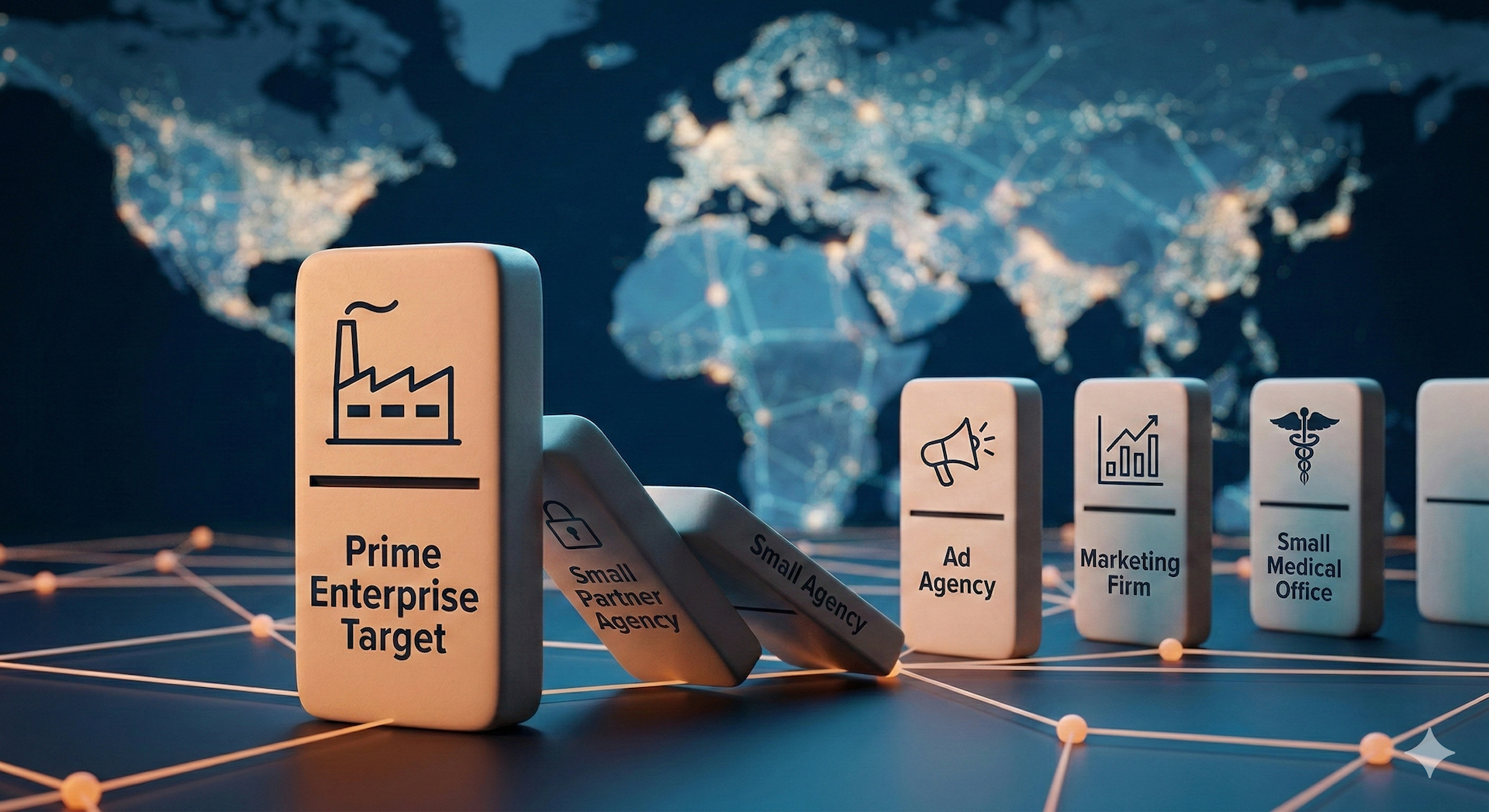
A supply-chain attack doesn't target a large organization directly. Instead, attackers compromise a smaller vendor or partner that has trusted access to the real target. Think of it like this: a hospital has strong security. But their marketing agency — which has access to the hospital'ssocial media accounts, website backend, and maybe even their email system — has almost none. Attacking the agency is the back door.
This isn't hypothetical. It's the actual attack pattern behind some of the most damaging breaches in recent years. The initial victim was often a relatively small company that served as a bridge into a much larger target.
Agencies are appealing to attackers for several specificreasons:
• Access to multiple clients from one point. An attacker who compromises your systems doesn't just get you — they potentially get access to every client whose accounts you manage. That's an efficient attack.
• Trusted relationships. Your clients trust emails from your domain. Attackers who compromise your email can impersonate you convincingly — requesting wire transfers, sharing malicious files, or harvesting login credentials.
• Lower security than enterprise targets. Large companies invest heavily insecurity. Small agencies typically don't. Attackers take the path of least resistance.
• Credential reuse. If your team members use the same passwords across tools, one compromised account can cascade into access to client systems, project management tools, ad platforms, and more.
A phishing email hits someone on your team. They click alink and enter their credentials on what looks like a Google login page. The attacker now has access to that person's email. From there, they monitor communications, look for financial conversations, identify your biggest clients, and wait for the right moment — usually a contract negotiation or invoice cycle — to step in and redirect funds or launch a broader attack on your clients' systems.
By the time anyone notices, the damage is done. And as the vendor who provided the entry point, your agency may face legal liability on top of the reputational fallout.
You can't eliminate the risk of being targeted. But you can make yourself a much harder target and limit the blast radius if something doeshappen:
• Use multi-factor authentication on every tool that touches client accounts or data.
• Give each team member their own accounts — no shared logins.
• Train your team to recognize phishing emails, especially ones that create urgency.
• Use a password manager — unique, strong passwords for every platform.
• Review what client access you need and remove anything that's no longer active.
Supply-chain attacks succeed because they exploit trust. The best defense is making sure that trust is backed by security practices thatmatch the access you've been given.
Complex networks and relentless threats call for smarter, integrated security, beyond the basics.

Have questions or want a demo? Fill out the form below and we’ll respond promptly.